Follow BTI:
Information Science & Engineering Department Logo
ISE
Department

Information Science & Engineering

The Department of Information Science and Engineering is started in the year 2025 with an intake of 60 students and is headed by Dr. Sree rama Reddy .G M who has more than thirty years of experience in teaching in reputed engineering colleges.

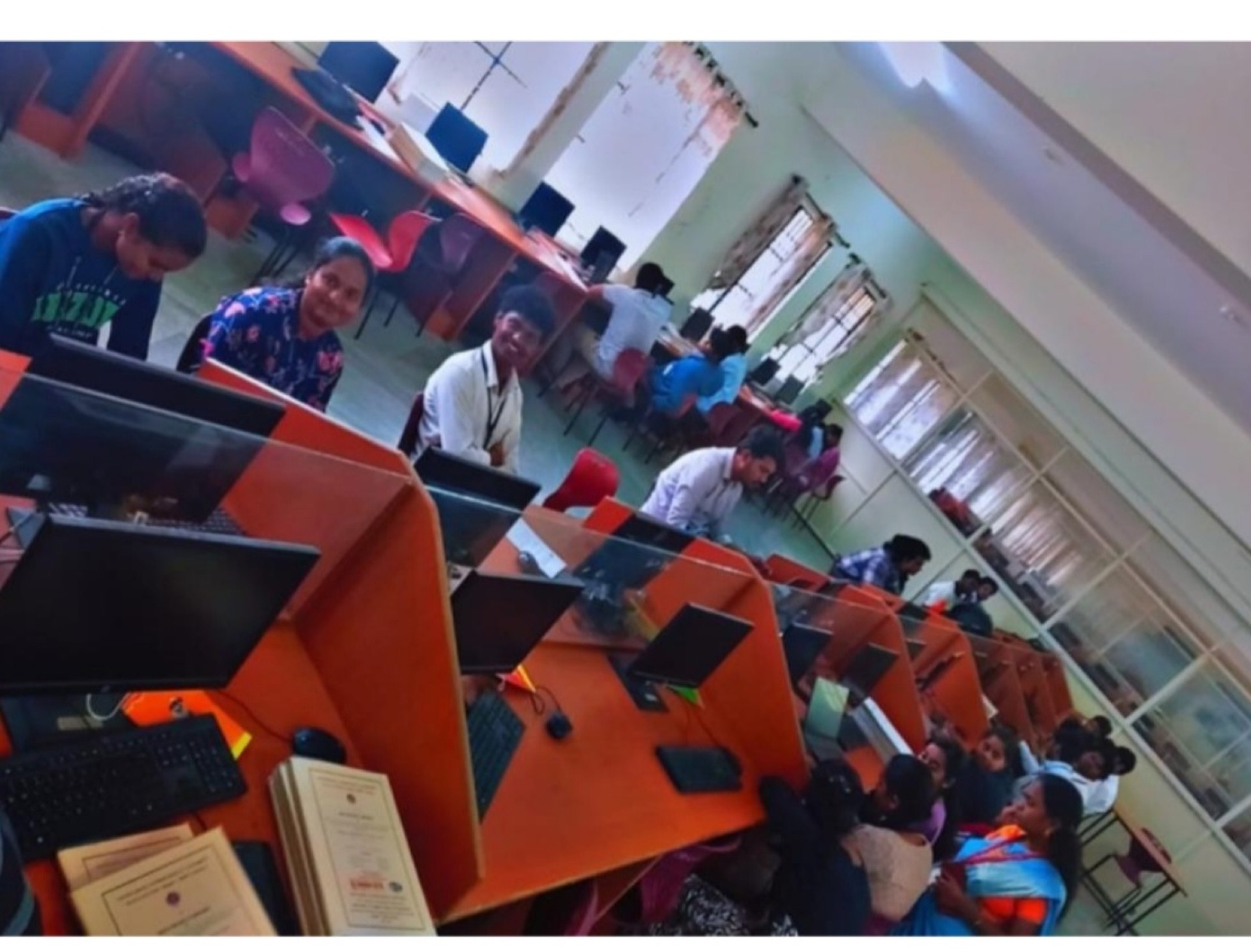
The Department is well equipped with a fully centralized computer centre with LAN connection. The Department has well qualified, experienced and dedicated faculty members specialized in object-oriented system analysis and design, artificial intelligence, expert systems, distributed computing, multimedia, RDBMS, computer networks, neural networks, data communication, OOPS, data structures and algorithms, software engineering, operating system and network security.

Department thrive to widen the awareness of students in professional, ethical, social and environmental dimensions, to strengthen the theoretical and practical aspects of the learning process, to ensure students acquire unique skills to design and develop and to find solutions of the highest quality and standards to resolve software problems and issues while maintaining the academic results not to fall below 95%.

  • Head of the DepartmentDr. Sreerama Reddy G M
  • Laboratories7 specialised labs
  • Experience30+ years
Apply for Admission
Leadership

Message from the Head of Department

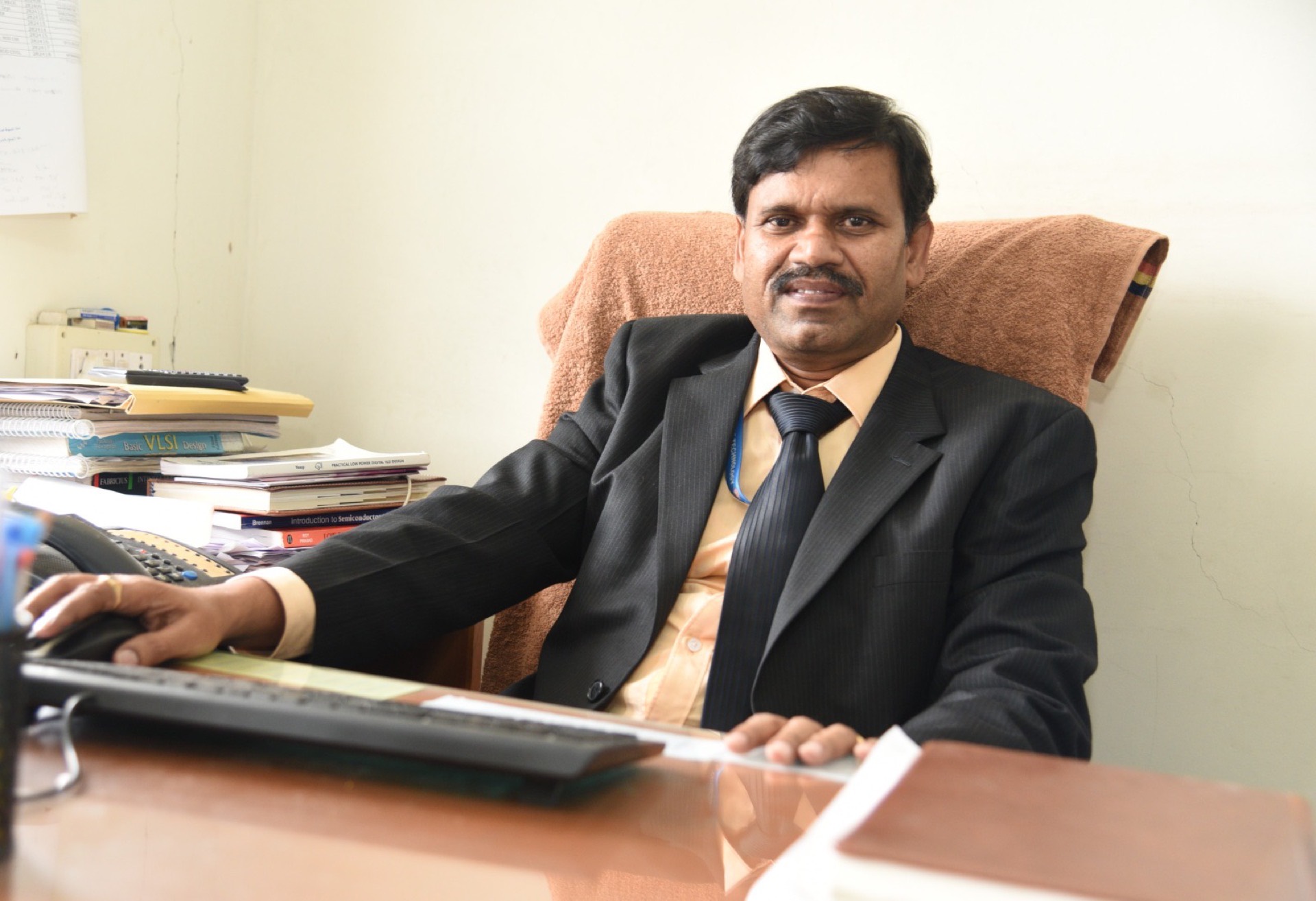
Dr. Sreerama Reddy G M
Dr. Sreerama Reddy G M Professor & Head, Information Science & Engineering B.E., M.E., Ph.D. 30+ years of teaching experience

The Department of ISE is dedicated to provide excellent and quality education and follows university guidelines from time to time and ready to provide all necessary guidelines in campus and We the Department members happly welcome all the aspirants to ISE Dept..and wish you all a happy journey for successful future....

Professor & Head of the Department of Information Science & Engineering at BTI. Specialises in Low Power VLSI Design. Ph.D. from JNTU AP (2009), M.E. from Bangalore University (1996), B.E. from PDACEG Gulbarga University (1990). Has 30+ years of combined teaching, industry, and research experience, and has served as HOD, Vice Principal, Dean, Principal, and Director in leading institutions. Recipient of a Research Grant of Rs 60 lakhs under VGST. Has published 25 journal papers and 15 conference papers, filed 2 granted design patents (1 submitted), guided 70 UG and 20 PG projects, and produced 12 Ph.D. scholars. Member of IEEE, ISTE, and IE. Contact: sreeramareddy@btibangalore.org | 9738481799

Vision

To empower Information Science and Engineering students with computer knowledge and skills in information and emerging technologies, fostering innovation ,research,ethical values and sustainable solutions for societal development

Mission

  1. M1: To Mold the ISE students as responsible professionals and citizens by providing an excellent learning environment
  2. M2: To Induce preliminary and contemporary IT principles of the industry among the students
  3. M3: To Incubate the students with emerging entrepreneur intelligence and develop strong force of students to solve the real time problems of the IT industry and to support and facilitate lifelong learning.

Department at a Glance

  • AICTE Approved Intake60 Seats
  • Affiliated to VTU, Belagavi
  • 8 Specialised Laboratories
  • Curriculum coversC/C++/Java, Data Structures, DBMS, Operating Systems, Computer Networks, Web Technologies, Information Security, Software Engineering
  • Aligned with VTU ISE scheme and latest industry requirements

Key Focus Areas

  • Database Design & Management (SQL, Oracle, NoSQL)
  • Software Engineering & Agile Development
  • Computer Networks & Network Security
  • Web Technologies & Full-Stack Development
  • Information Security & Cryptography
  • Operating Systems & System Programming
  • Cloud Computing & Distributed Systems

PROGRAM EDUCATIONAL OBJECTIVES (PEOs)

  1. PEO1: Strong technical foundation
  2. To uplift the students through Information Technology Education to solve engineering problems in different domains.
  3. PEO2: Professional competence
  4. To provide and exposure to emerging technologies and train them to Employable in Multi-disciplinary industries and able to lead & manage teams and contribute to the society.
  5. PEO3: Innovation and Entrepreneurship
  6. To promote collaboration with industry and academia for constructive interaction to empower Entrepreneurship and engage in research, innovation and entrepreneurial activities by leveraging information science and emerging technologies.
  7. PEO4: Skills and lifelong learning
  8. To Motivate them to become good professional skill Engineers to exhibit interpersonal skills and attitudes in the process of Lifelong learning.
  9. PEO5: Professionalism and Leadership
  10. To Inspire them to exhibit professional ethics, leadership qualities, team management while working with multidisciplinary environments.

PROGRAM SPECIFIC OUTCOMES (PSO)

  1. PSO1 :  Problem solving and analysis
  2. Graduates will excel as Information Science Engineers with ability to solve wide range of computational problems in IT industry, Government or other work environments.
  3. PSO2 : Research, innovation and emerging technologies
  4. The graduates of the program will have the ability to build software products by applying theoretical concepts, new technologies and programming skills using innovative ideas.
  5. PSO3 : Successful Career and Entrepreneurship:
  6. The graduates of the program will have the ability to pursue higher studies, Entrepreneurs, Professional careers & value-added professionals.


PROGRAM OUTCOMES(POs)

  1. PO1: Engineering Knowledge
  2. Apply the knowledge of mathematics, natural science, computing, and engineering fundamentals and an engineering specialisation to the solution of complex engineering problems.
  3. PO2: Problem Analysis
  4. Identify, formulate, and analyse complex engineering problems, reaching substantiated conclusions with consideration for the holistic nature of the problem.
  5. PO3: Design/Development of Solutions
  6. Design creative solutions for complex engineering problems and design systems, components, or processes to meet identified needs, with consideration for public health and safety, and cultural, societal, and environmental factors. Sustainability is now intrinsic to design.
  7. PO4: Conduct Investigations of Complex Problems
  8. Conduct investigations of complex engineering problems using research-based knowledge and research methods, including design of experiments, analysis and interpretation of data, and synthesis of information to provide valid conclusions.
  9.  
  10. PO5: Engineering Tool Usage
  11. Create, select, and apply appropriate techniques, resources, and modern engineering and IT tools, including prediction and modelling, recognising their limitations, to solve complex engineering problems. (Previously titled “Modern Tool Usage.”
  12.  
  13. PO6: The Engineer and the World
  14. Analyse and evaluate societal and environmental aspects while solving complex engineering problems, considering their impact on sustainability with reference to economy, health, safety, legal frameworks, culture, and the environment. This PO merges the old PO6 (Society) and old PO7 (Environment and Sustainability) into one.
  15.  
  16. PO7:Ethics
  17. Apply ethical principles and commit to professional ethics, human values, diversity, and inclusion; and adhere to relevant national and international laws. (Diversity and inclusion are now explicit additions.)
  18. PO8: Individual and Collaborative Team Work
  19. Function effectively as an individual, and as a member or leader in diverse and multi-disciplinary teams.
  20. PO9: Communication
  21. Communicate effectively and inclusively within the engineering community and with society at large, comprehending and writing effective reports and design documentation, and making effective presentations, considering cultural, language, and learning differences.
  22. PO10: Project Management and Finance
  23. Apply knowledge and understanding of engineering management principles and economic decision-making, and apply these to one’s own work, as a member and leader in a team, to manage projects in multi-disciplinary environments.
  24. PO11: Life-Long Learning
  25. Recognise the need for, and have the preparation and ability for, independent and life-long learning, adaptability to new and emerging technologies, and critical thinking in the broadest context of technological change.

4Year B.E. Programme
7+Specialised Labs
VTUAffiliated & AICTE Approved
2025Established
Gen AI Lab laboratory

Laboratories & Facilities

  • Gen AI Lab
  • Machine Learning Lab
  • Python Lab
  • Computer Networking Lab
  • DBMS Lab
  • AWS Lab
  • UNIX Lab

Events

21November 2024

Students Outreach Activity-AI&ML Industrial Visit to Kerala

21-24 November 2024   Kerala (KINFRA, CUSAT, Science Tech Park)

AI&ML Department students (5th & 7th Semester) visited Maker Village, Integrated Startup Complex KINFRA Kalamassery, CUSAT, Athirapalli Waterfalls,…

14December 2024

In-House Flameless Cooking Competition-AI&ML & CE Departments

9:00 AM   BTI ACR-25

Part of the December SCR (Social Connect & Responsibilities) Activity series,students from AI&ML and Computer Engineering departments competed…

27January 2025

Two Weeks Faculty Entrepreneurship Development Program-India’s Vision 2047

27 Jan-8 Feb 2025   Avinashilingam Institute, Coimbatore

BTI faculty participated in a two-week Entrepreneurship Competency Building Program towards India's Vision 2047, organised by the Dept.…

Ready to build your career in ISE?

Join Information Science & Engineering at Bangalore Technological Institute — industry-aligned learning, modern labs and strong placement support.

Admission Enquiry Chat on WhatsApp